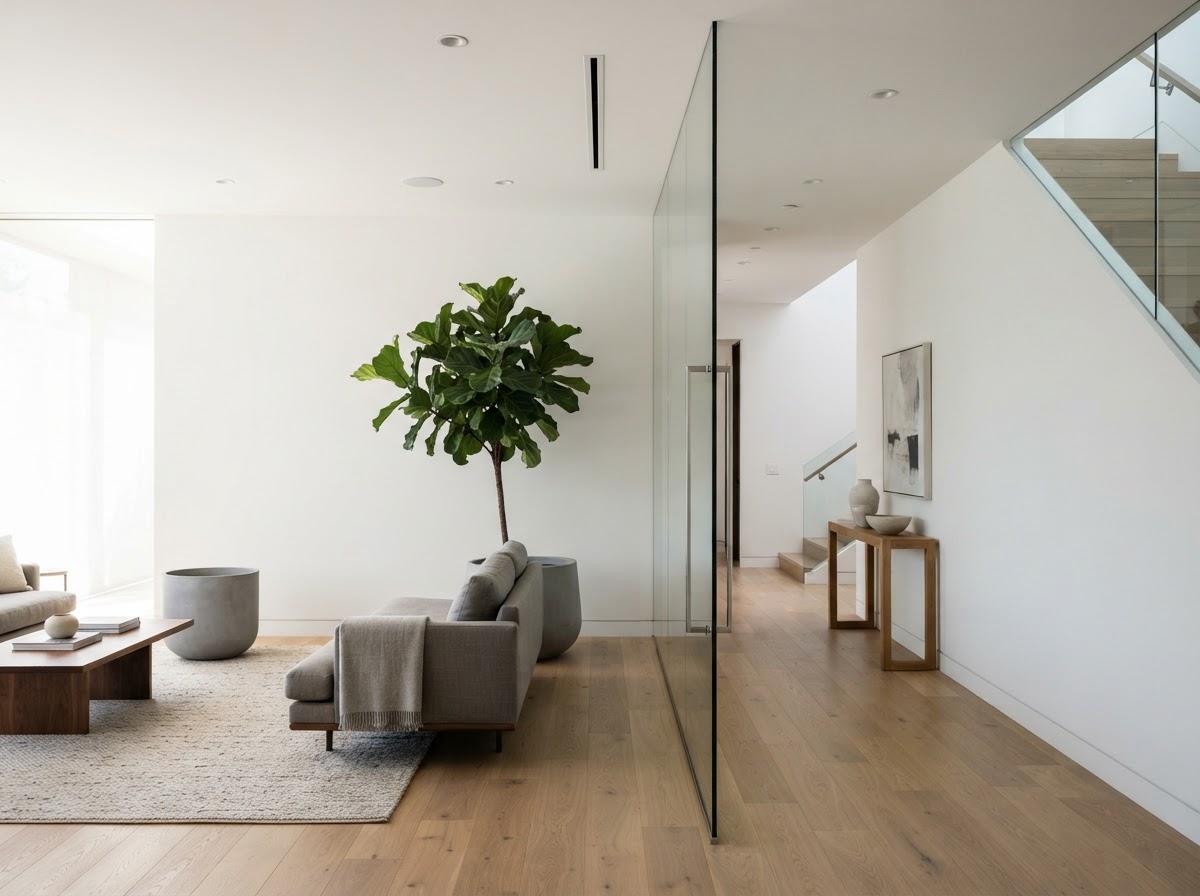
What a custom mirror is
A custom mirror is a pane of mirror glass cut to the width and height of your wall or vanity, with an edge finished to suit the placement. Standard mirrors come in fixed sizes and force the wall to adapt; a custom mirror adapts to the wall. That distinction is the whole point — the mirror is built to the space, not the other way around.
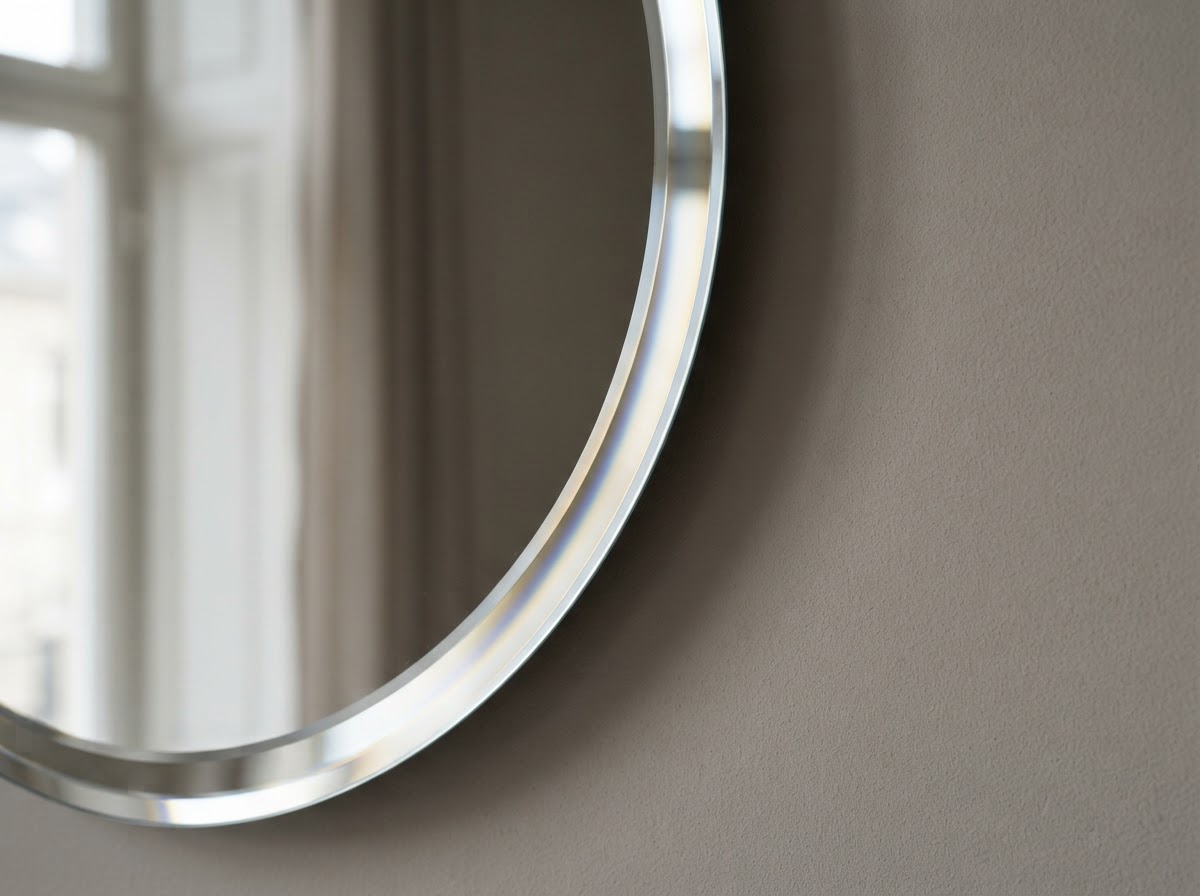
The edge finish is part of what makes it custom. A polished edge is a flat, smoothed edge that reads as a clean line; a beveled edge adds a small angled facet that catches light and frames the reflective field. We cover the beveled option in detail on the beveled mirrors page; here we focus on custom sizing and placement.
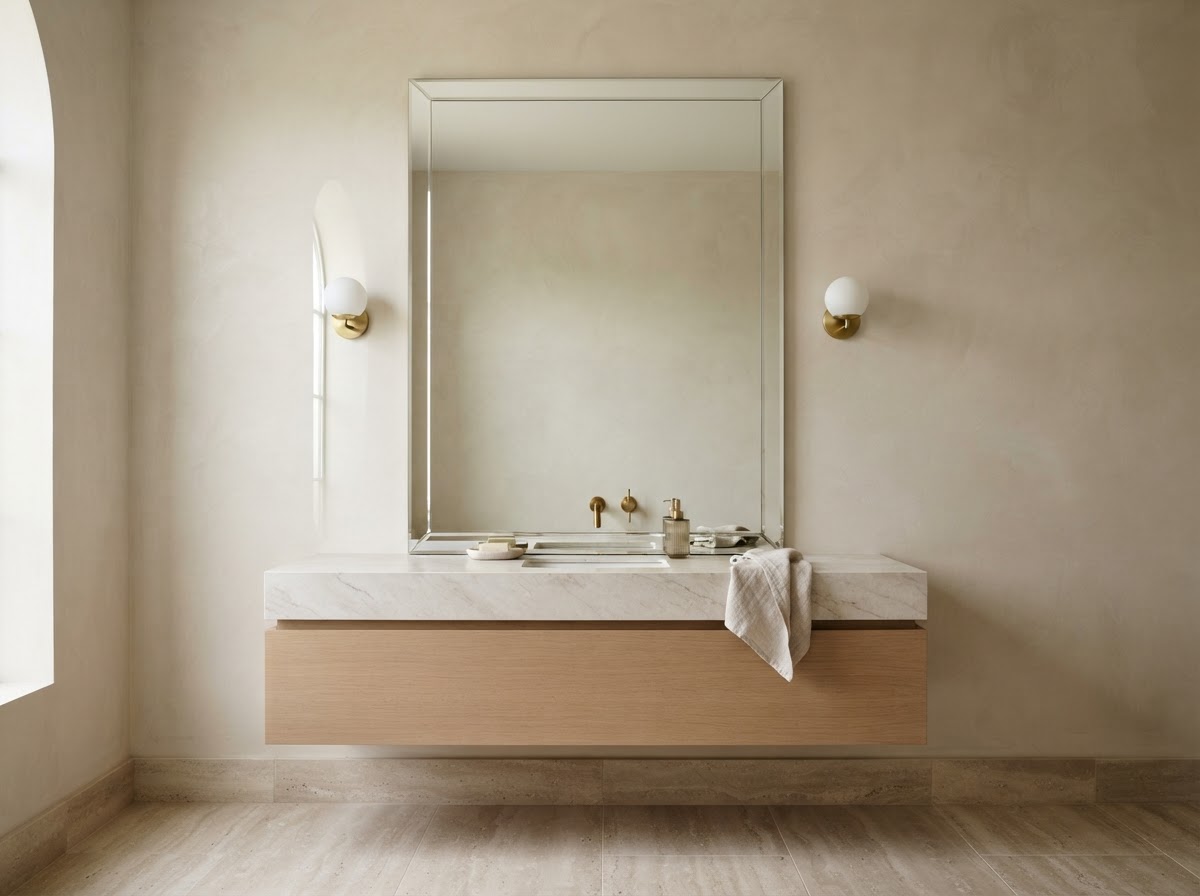
Sizing to the wall and the vanity
A vanity mirror is sized to the vanity and the sink — wide enough to serve the basin, set to clear the faucet and the sconces, and tall enough to read as a mirror rather than a strip. A wall mirror is sized to the wall and the room, often running most of the width of a wall to carry light across the space. Each is cut to the opening it serves.
We do not default to a standard size. The dimensions follow from the wall, the fixtures, and the look you want. A mirror that is too small for the wall reads as an afterthought; a mirror that is too large can overwhelm the room. We talk through the right size for your space.
Light and reflection
A mirror does two things with light: it reflects what is in front of it and it carries light from one part of a room to another. A mirror placed across from a window brings the window's light deeper into the room; a mirror at the end of a hallway makes the hall read as longer. Where the mirror sits changes what it does with light.
We plan the placement with the light in mind. A mirror that faces a window, a mirror that sits above a vanity between two sconces, and a mirror set into a dark corner each do different work, and we size and place each for the light it has to work with.
Wall conditions and what they mean
A mirror sits on a wall, so the wall has to hold it. A large mirror is heavy, and the wall has to be capable of carrying both the weight and the fasteners. A wall in good condition with framing behind it accepts a large mirror; a wall with weak or unknown backing may need a different approach. We look at the wall before specifying the mirror.
The wall's flatness also matters. A mirror against a flat wall reads cleanly; a mirror against a bowed wall shows the wave. Where the wall is out of flat, we talk about it before the mirror is built, because the glass can only follow what is there.
Installation access
A large mirror has to get into the room and onto the wall, and that is not always simple. A mirror that fits the wall may not fit the door, the stair, or the elevator that gets it there. We plan the handling as part of the project, because a mirror that cannot be installed is not useful even if it is perfectly fabricated.
For a fabrication-with-installation order we handle the access and the install. For fabrication only we make the mirror to the dimensions you provide and you arrange the install; in that case we can talk through what the install will involve so you can plan it.
Edge considerations
The edge of a custom mirror is either polished flat or beveled. A polished edge is the simpler, cleaner option and suits a mirror set into a frame or a trim where the edge is not the feature. A beveled edge is the feature — the angled facet catches light and reads as a finished detail against the wall. We can plan either; the choice follows the room.
Where the mirror sits in a frame, the frame holds the edge and the finish is less visible. Where the mirror sits directly on the wall with no frame, the edge is the detail you see, and the finish matters more. We talk through the edge as part of the placement, not as an afterthought.
Glass type and clarity
Mirror glass is clear or low-iron. Clear mirror glass has a faint green tint at the edge that is most visible on a large or thick mirror; low-iron mirror glass reduces that tint for a more neutral, brighter reflection. On a light wall or a large mirror, the difference is visible, and we explain it for your project.
We do not offer LED mirrors, smart mirrors, or specialty mirror products unless they are separately confirmed. Our work is custom-cut mirror glass, finished and placed to suit the wall and the light. If you have a specific product in mind, tell us and we will be honest about what we can and cannot provide.
Measurement
For a fabrication-with-installation order we measure the wall on site, capturing the width, the height, and the condition of the wall. For fabrication only we work from the measurements you provide, and we guide you on what to capture so the mirror fits. A wall that is out of square is common, and it has to be in the order.
We also ask about the fixtures — the faucet, the sconces, the trim — because the mirror has to clear them. A mirror cut to the wall but not to the fixtures will not fit the room, and the fixtures are part of the opening the mirror serves.
Fabrication and installation options
A custom mirror can be ordered as fabrication only or fabrication with installation. Fabrication only suits a project where someone on the project can handle the install; we make the mirror to the dimensions you provide. Fabrication with installation means we measure, deliver, and install the mirror we built.
The right split depends on the size of the mirror and who is responsible for the wall. A large, heavy mirror is a safer installation project than a small one, and we can advise once we know the scope. The two options apply across our services.
Care and maintenance
A mirror is cleaned with a soft cloth and a non-abrasive glass cleaner, sprayed onto the cloth rather than the glass to keep the cleaner off the edge and the backing. The edge and the backing are the parts that age; a polished edge stays clean with routine wiping, and a backed mirror kept dry lasts a long time.
We can walk through basic care when the mirror is installed. We are honest about what the material will and will not do over time — a mirror in a humid bathroom, for example, ages differently than one in a dry hallway, and the placement is part of how it holds up.
Factors that affect scope and cost
The scope of a custom mirror changes with the size, the glass type, the edge finish, and whether we install. A small vanity mirror with a polished edge is a different project than a large low-iron wall mirror with a beveled edge. We do not quote a price without reviewing these factors, because a price that ignores the wall is not a useful estimate.
We do not publish prices or promise a turnaround time as confirmed capabilities. The estimate we give is specific to your wall after we review the size, the glass, and the edge. That review is what makes the estimate worth having.
What to share for an estimate
Useful first steps for a custom mirror are the width and height of the wall or vanity, the fixtures the mirror has to clear, and a photo of the wall from the room. If you know the edge finish you want, tell us; if not, we can suggest one once we see the wall. The free estimate is where this begins.
We do not need a full set of drawings to start. A wall in a renovation can still be estimated — we will simply note that the measurements are preliminary and confirm them at the right stage. The goal is a mirror that fits the wall you will actually have.
Related services and next steps
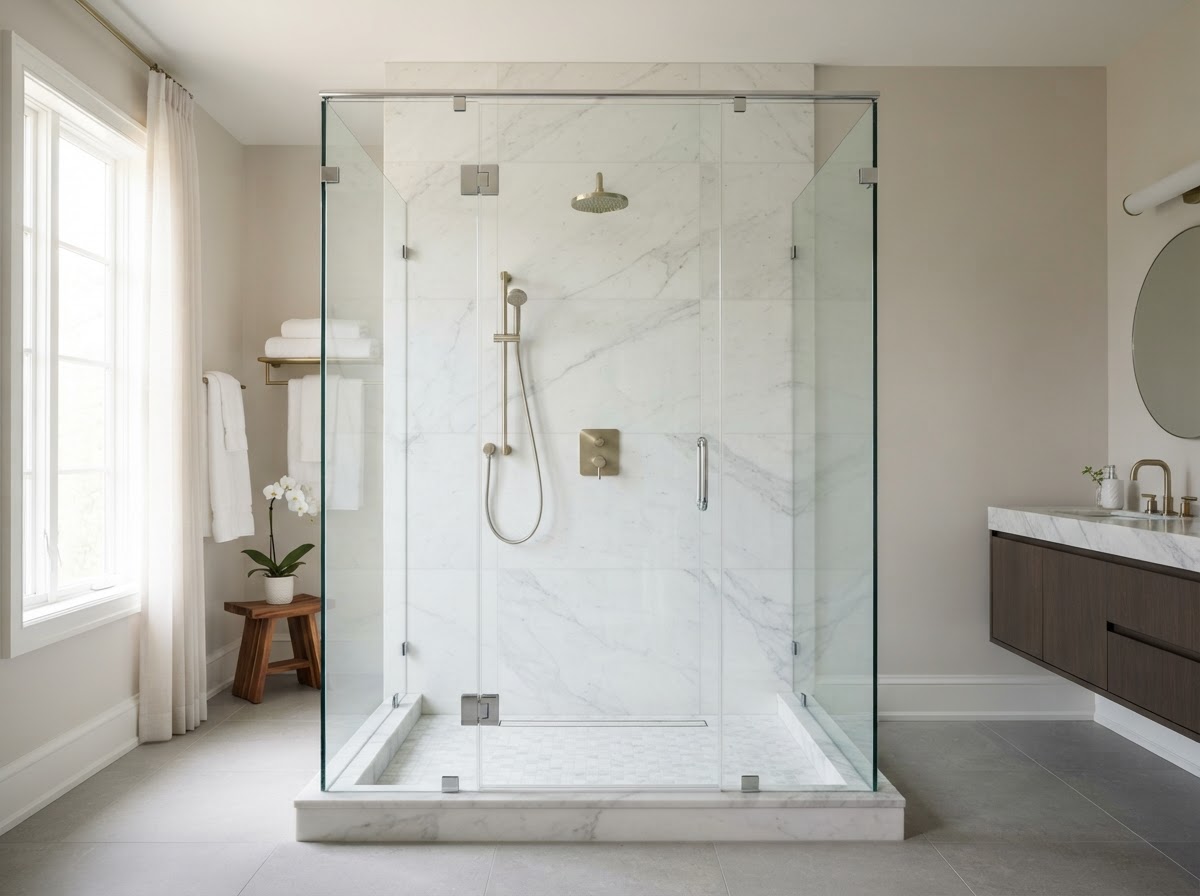
Mirror work often pairs with other glass in the room. A beveled mirror is the next detail when the edge is the feature, and a frameless shower enclosure in the same bathroom can be planned so the metalwork and the glass read together. Custom interior glass & panels elsewhere in the home can carry the same light the mirror does.
If you are planning a custom mirror, the useful next step is a measurement and a conversation about the wall, the light, and the edge. Share the dimensions and photos through the estimate form or call us directly. Estimates are free, and reviewing the wall before fabricating is how we keep the mirror accurate to your space.