
Custom glass and mirror across Miami-Dade
Miami-Dade is a county of varied architecture — single-family homes in Doral and Coral Gables, high-rise residences in Brickell and Miami Beach, and commercial corridors through Little Havana, Wynwood, and along US-1. The glass and mirror needs that come up across that range are different, and most of them come back to the same starting point: a specific opening that a standard panel will not fit. That is the work we do. We fabricate glass to the dimensions of your space rather than adapting your space to a stock size, and we offer fabrication with installation when the project needs it.
What that means in practice is that a shower enclosure is cut to the width and height of your opening, not to a catalog size. A stair railing is planned around the run and rise of your staircase. A mirror is sized to the wall or vanity it sits on. A storefront entrance is glazed to the existing frame. Across residential and commercial work, the discipline is the same: measure the opening, understand the conditions around it, and fabricate a piece that fits. We do not promise a standard product off the shelf, and we do not ask you to adapt your space to one. The estimate starts with a conversation about the opening, and it is free.
Residential applications in the county
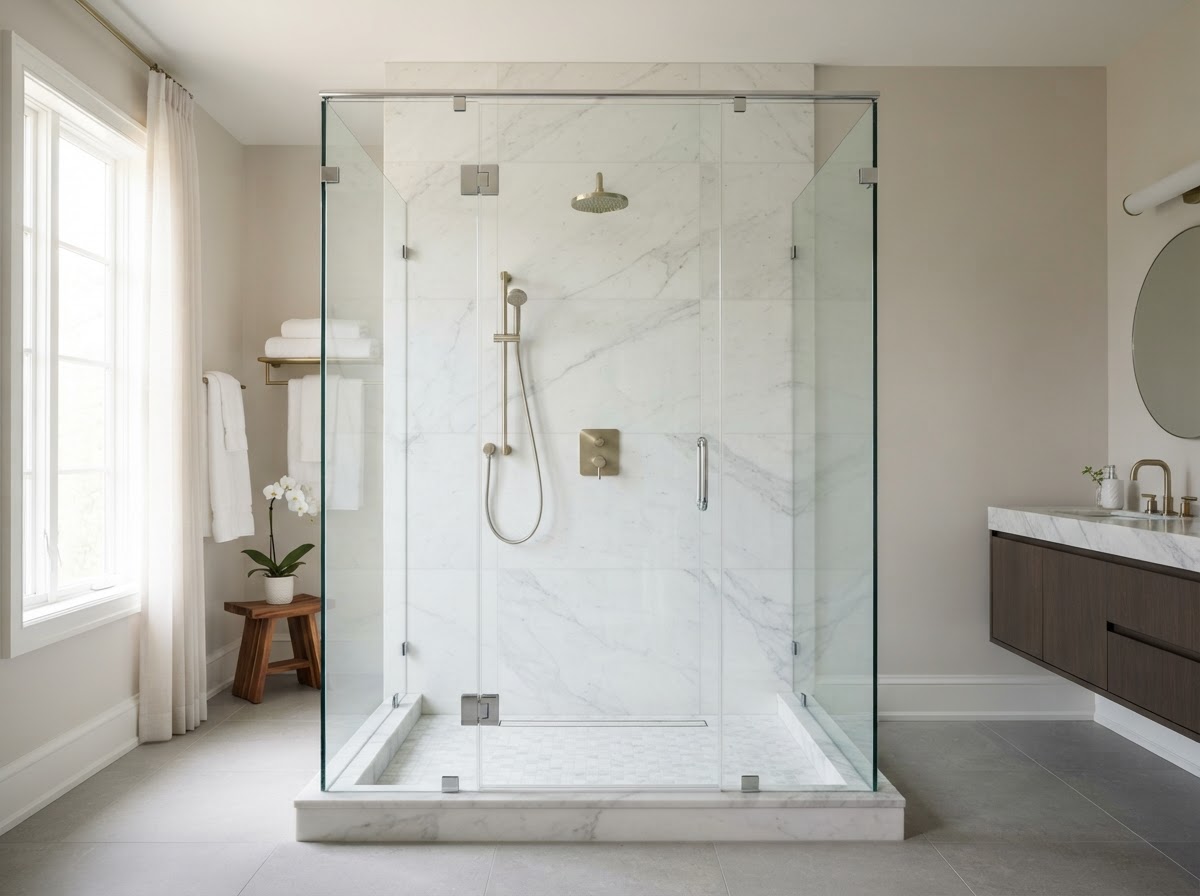
In homes throughout Miami-Dade, the requests we see most often begin with frameless shower doors & enclosures. A frameless enclosure is built from thick tempered glass with minimal hardware, and every opening — a master bath in a Doral single-family home, a compact guest bath in a Miami Beach condo — has its own width, height, and swing clearance. We measure the opening and fabricate to it, so the door closes cleanly against the return and the hardware lands where it should. Planning a shower also means thinking about the wall condition behind the glass, the floor material and pitch toward the drain, and the clearance for the door to open without striking a vanity or a towel bar.
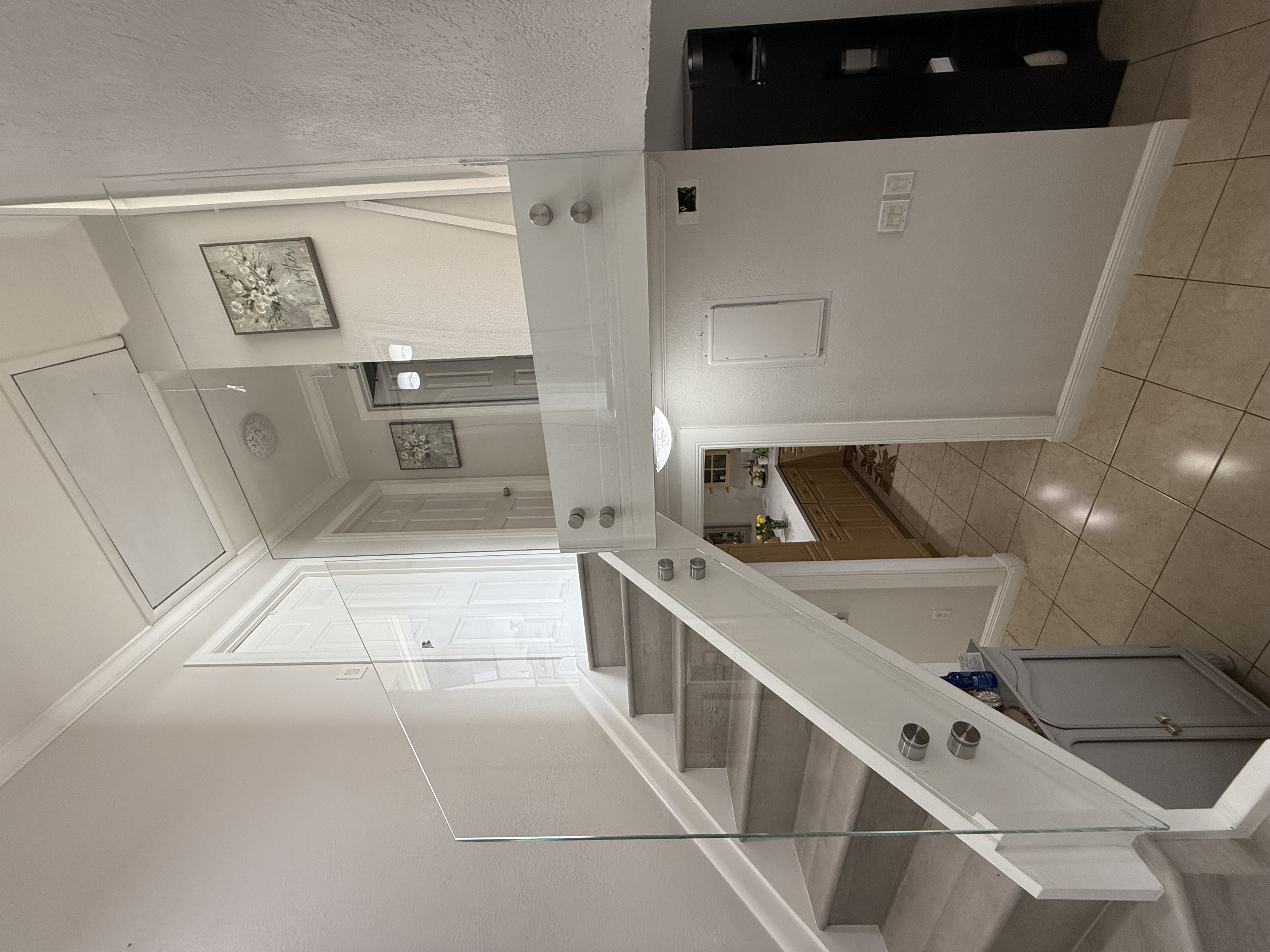
Beyond showers, stair glass railings come up in multi-story homes across Coral Gables, Pinecrest, and Kendall, where an open stair wants light and sight lines instead of solid balusters. Our confirmed scope is the glass railing itself — the balustrade, the supporting hardware, and the integration with the existing staircase — not the structural stair treads or the complete staircase. We coordinate with your contractor or designer on mounting conditions at the landing, the pitch of the staircase, and how the top rail continues or terminates, so the glass reads as part of the architecture rather than something added at the end. On upper floors and exterior applications, balcony glass railings serve a similar purpose at the balcony edge, and the assembly and glass specification depend on the opening and the exposure.
Mirrors are another common residential request. A custom mirror is cut to the wall or vanity it sits on, whether that is a wide double vanity in a master bath or a floor-to-ceiling wall mirror in a home gym. Where the edge matters — where light should catch the perimeter and frame the reflective field — beveled mirrors add an angled edge that refracts light along the bevel. We also fabricate custom glass table tops for dining tables, consoles, and desks, including protective tops laid over an existing wood surface, cut to the table's dimensions and finished with a polished edge so the glass does not chip at the corners. For interior separation — a home office, a partition between living areas — custom interior glass & panels keeps light moving through the floor plan while defining the spaces on either side.
Commercial applications in the county
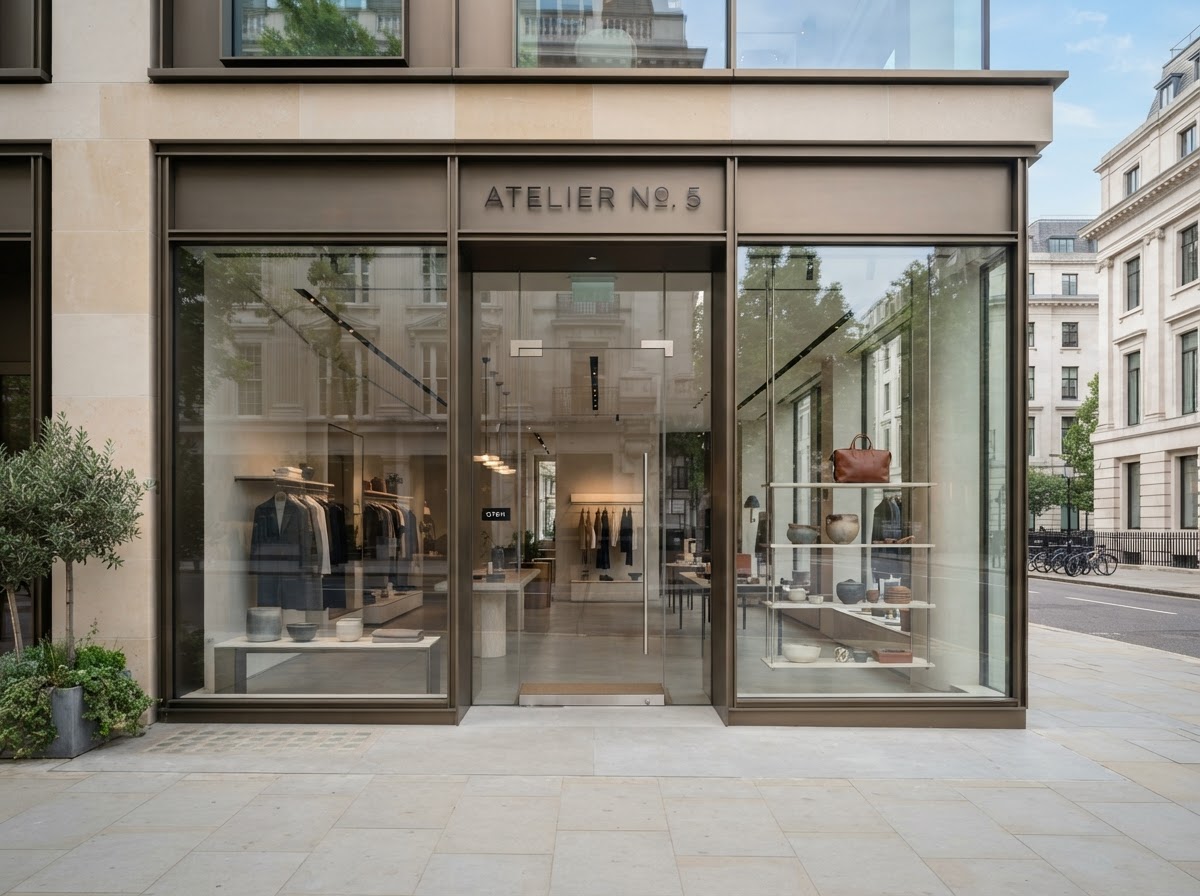
On the commercial side, Miami-Dade's retail and office market keeps glass in steady demand. Commercial storefront glass defines a storefront's first impression — the entrance doors, the display glazing, the facade — and we fabricate to the opening and the finish the project requires. Storefront work often means coordinating around an existing frame, an entrance that has to swing correctly, and display glazing that has to stay bright and clean. Inside the building, office glass partitions create private rooms and meeting areas while preserving the daylight that comes through the exterior windows; we plan the layout around the floor plan, the door swings, and the points where the partition meets an existing wall or column.
Where an opening calls for impact-rated glazing, impact glass is specified as part of an appropriate, engineered assembly — the glass, the frame, the attachment, and the documentation all have to work together. Laminated glass and impact-rated glass are related but not the same thing, and the right assembly for a given opening depends on the building and the local requirements, which we review with you rather than assuming a one-size answer. We do not represent glass as unbreakable or hurricane-proof; we review the conditions and propose an assembly that fits them. For openings where the existing glass has failed or the building is being updated, window replacement is a separate scope that depends on whether the frame is sound and whether the opening calls for a different glass type.
Fabrication only, or fabrication with installation
Most of our work can be ordered either as fabrication only or as fabrication with installation, and the right scope is a project decision rather than a default. A contractor who already has a glazing crew on site may want us to fabricate the panels to spec and hand them off for installation. A homeowner replacing a single shower usually wants us to measure, fabricate, and install so the responsibility for fit sits in one place. We are glad to talk through which makes sense for your project in Miami-Dade before you commit — tell us whether installation is in scope and we will quote accordingly.
The same applies to window replacement, where replacing the glass in an existing frame and replacing the entire window assembly are different scopes, and the correct one depends on the condition of the frame and the requirements of the building. For a stair or balcony railing, the scope may include fabrication of the glass and hardware, installation on site, or both — and whether the existing mounting surface is suitable is something we review before proposing the assembly. Fabrication-only orders are common for contractors and designers who have their own install team; fabrication-with-installation is common for homeowners and for commercial properties that want a single point of accountability. Neither is better by default; the right one is the one that fits the project.
What affects scope and estimate
A number of things shape the estimate on a glass or mirror project, and most of them are specific to the opening. The dimensions of the opening are the first: a 36-inch shower door and a 60-inch enclosure are different amounts of glass, different hardware, and different handling. The type of glass — clear, low-iron, pattern, or a tint — changes the material. The edge treatment matters; a flat polished edge and a beveled edge are different operations. The hardware and finish on a frameless shower, the mounting condition on a stair railing, and the number of openings on a storefront job all feed the estimate.
Installation adds labor, travel to the site, and access considerations — which in Miami-Dade can mean anything from a curb and driveway in Doral to an elevator reservation and a certificate of insurance in a Brickell tower. We do not quote a number until we understand those conditions, because they change the work. A quote built on assumptions is a quote that breaks when the install day arrives. We would rather have the conversation up front, confirm the scope, and come back with an estimate that holds. That is why estimates are free and start with a conversation rather than a price sheet.
Measurements and the information we need
For a fabricated-to-spec piece of glass, the measurement is the foundation of the whole job. For an installation, we typically measure on site so the panel is cut to the opening as built, not as drawn. Either way, the more information you can share up front, the faster we can advise. A photo of the opening, the rough width and height, the type of service you are after, and the neighborhood or ZIP code where the work is located let us confirm service availability and start a realistic conversation about scope.
For commercial work, the building address and access notes — hours of operation, loading dock, parking — help us plan the site visit. For a shower, the wall material behind the glass and the floor pitch matter. For a railing, the mounting surface at the base and the landing matter. For a mirror, the wall condition and whether it is a vanity or a full wall matter. You do not have to know all of that before you call — that is our job — but anything you can share shortens the path to a useful estimate. You can send all of it through the estimate form on this page, and we will come back with questions or a quote.
Access and installation planning
Installation planning in a dense county like Miami-Dade has practical layers that change from neighborhood to neighborhood. A high-rise in Brickell or on Miami Beach usually means coordinating with the building on a certificate of insurance, an elevator reservation, and working hours; a single-family home in Doral or Kendall is a curb and a driveway. Condominium rules, parking, and the route from the loading area to the unit all affect the install day. We do not invent those constraints — we ask about them and plan around them.
If your project is in a managed building, letting us know the property's requirements early keeps the estimate and the schedule realistic. Some buildings require a scheduled appointment for any contractor work; some require a deposit or a certificate of insurance on file before a trade can enter. Some have restrictions on the hours a glass installation can run, or on which elevator can be used for material. None of that is unusual for South Florida, and none of it should be a surprise on the day of the install. We plan for it so the day goes the way it should.
Care and maintenance
Glass is a durable surface, but the details matter. On a frameless shower, squeegeeing the glass after use and keeping the hardware dry prevents hard-water buildup and keeps the door closing cleanly. South Florida water is hard, and a frameless shower that is not squeegeed will show it within a few weeks. On a stair or balcony railing, the glass and the hardware should be cleaned with a non-abrasive glass cleaner; abrasive pads scratch the surface and, on hardware, can dull the finish. Mirrors do best with a lint-free cloth and a streak-free cleaner, and the edges should be kept dry.
A glass table top protects the surface beneath it, but it should sit on a clean, level surface and be lifted rather than dragged when it is moved. None of this is specialized maintenance — it is ordinary care done with the right materials, and we are glad to walk through it for the specific piece we made. If a piece of hardware loosens over time, or a seal on a shower door needs attention, that is something we want to know about. We fabricate to last, and we are a phone call away if something needs a second look.
Working from our Miami studio
We are based at 4480 NW 73rd Ave, Miami, FL 33166, in the Milam Industrial Center — in Doral, just west of the Palmetto Expressway. That location puts us close to the residential neighborhoods across the western half of the county and to the commercial corridors running east toward the city. We do not keep a branch office in each neighborhood; the work is fabricated at the studio and delivered or installed on site. If you would like to visit, it helps to call ahead so we can have the right samples or drawings ready.
We serve residential and commercial customers across the county and confirm service availability for your specific area when you request an estimate. The county is large, and conditions vary from the coast to the western communities, so confirming the area up front is how we make sure the estimate reflects the project. Whether the work is a single shower door in Doral or a storefront job in Wynwood, the conversation starts the same way: you tell us about the opening, and we tell you what we can do.
Next steps
If you have a glass or mirror project in Miami-Dade, the simplest first step is to tell us about it. Share the service you need, the neighborhood or ZIP code where the work is located, and a few measurements or photos if you have them. We will confirm that we cover your area, review the scope, and come back with a free estimate and a clear view of whether installation is included. You can request a free estimate from this page or call us directly — either way, the conversation starts the project, and the estimate does not cost anything.