What a custom glass table top is
A custom glass table top is a pane of glass cut to the dimensions and shape of a table. It can be a protective cover set over an existing wood or stone top — a surface that takes the wear while the surface beneath stays clean — or it can be the primary supported top of a table, where the glass is the surface and a base carries it. The two uses are different projects, and the glass is specified for each.
A protective cover sits on an existing surface, so its size follows that surface and its job is to take wear. A primary top is the surface itself, so it has to be thick enough to span the support and to carry what is placed on it. We fabricate to the use, not to a generic sheet — the table defines the glass.
Protective cover versus primary top
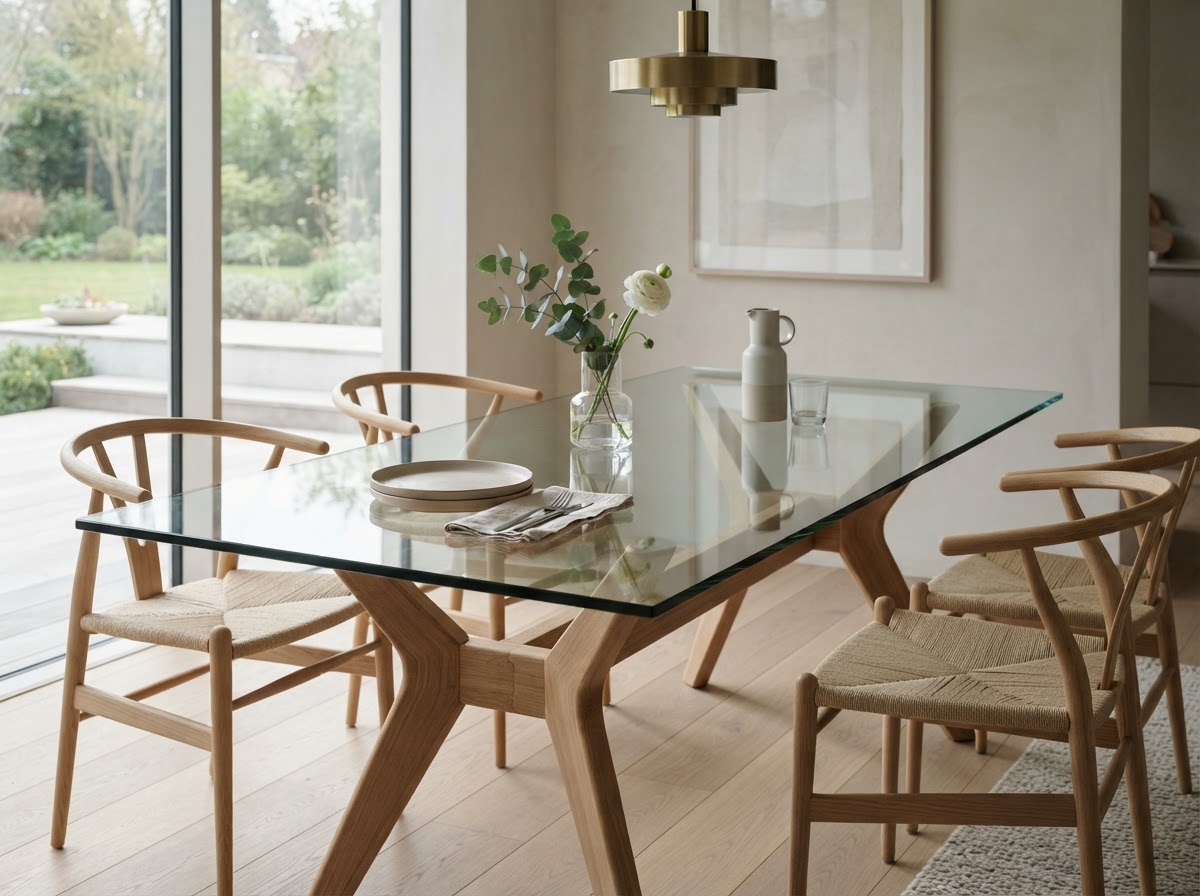
The distinction that matters is between a protective cover and a primary top. A protective cover sits over a wood or stone surface that is already the top; the glass takes the scratches and the heat, and the surface beneath is protected. A primary top is the surface — the glass is what you set things on, and a base or a frame carries it. They are different jobs with different thicknesses, different edges, and different support.
We do not assume one approach without seeing the table. A protective cover over a wood dining table is a different project than a primary top on a metal base, and each is fabricated to the use it serves. We talk through which you need rather than defaulting to one.
Custom dimensions and shape
A custom table top is cut to the table it covers or the base it sits on, so the dimensions and the shape define the panel. A rectangular top is one project; a round or oval top is another; a top with notched corners or a routed edge is another still. The shape follows the table, and the glass is cut to that shape.
Where the table has an existing edge — a beveled wood edge, a shaped stone edge — a protective cover can be cut to sit within that edge or to overhang it, and the choice is part of the design. We talk through how the cover should sit on the table before we cut, because a cover that does not fit the table it covers is not useful.
Thickness and the support condition
The thickness of a table top follows the use. A protective cover can be a thinner glass because the surface beneath carries the load; a primary top has to be thick enough to span the support and to carry what is placed on it without deflecting. The span between supports matters — a top that spans a long distance between a base's legs needs more thickness than one supported along its full edge.
We do not promise a particular thickness without reviewing the dimensions and the support. The right thickness follows the table and the use, not a default we apply across every project. Where the span is long or the load is heavy, we tell you honestly what the glass can and cannot do.
Edge planning
The edge of a table top is where the glass is handled and where it reads, so the edge is part of the design. A polished flat edge is smooth and clean; a beveled edge adds a facet that catches light; a penciled edge is a narrow, rounded polish. The edge follows the table and the look you want, and we talk through the options rather than choosing for you.
On a protective cover set inside a wood edge, the edge may be less visible; on a primary top where the edge is the detail you see, the edge matters more. We plan the edge with the table, the way we plan the size and the shape, because the edge is part of the piece.
Furniture protection
A protective cover is there to protect the surface beneath it — a wood dining table, a desk, a console. The glass takes the scratches, the water rings, the heat, so the wood or the stone underneath stays as it was. That is the job, and the glass is chosen for it: thick enough to take the wear, flat enough to sit stable, clear enough to show the surface beneath.
We talk through how the cover protects the table. A cover that slides or lifts is not doing its job; a cover that is too thin may crack under load. We size and specify the cover so it sits and protects, and we are honest about what it will and will not do over time.
Tempered glass and safety
Table top glass is typically tempered for safety, because a tempered lite breaks into small pieces rather than sharp shards if it breaks. The tempering is part of the fabrication, and a tempered top cannot be cut or edged after tempering — so the dimensions and the edge have to be right before the glass goes through the tempering furnace.
We do not promise a particular glass type or a particular tempering without reviewing the use. The right specification follows the table and the load, not a default. We are honest about what the glass can and cannot do, and we do not call any glass unbreakable.
Handling and installation
A table top is heavy and it has to be handled carefully — a large top has to get into the room and onto the table without chipping the edge or cracking the glass. A protective cover has to be set on the surface without sliding; a primary top has to be set on the base and fastened or set on bumpers. Handling is part of the project.
For a fabrication-with-installation order we handle the delivery and the set. For fabrication only we make the top to the dimensions you provide and you arrange the handling; in that case we can talk through what the install will involve so you can plan it.
Measurement
For a fabrication-with-installation order we measure the table on site, capturing the dimensions, the shape, and the support condition. For fabrication only we work from the measurements you provide, and we guide you on what to capture — the length, the width, any curves or notches, and a photo of the table from above. Those details let us fabricate to your table rather than a generic size.
We also ask about the edge and the use — protective or primary — because the glass follows the table. A protective cover over a wood table is a different project than a primary top on a metal base, and the conversation is part of the estimate.
Fabrication and installation options
A custom table top can be ordered as fabrication only or fabrication with installation. Fabrication only suits a project where you can handle the install; we make the top to the dimensions you provide. Fabrication with installation means we deliver and set the top on the table or the base.
The right split depends on the top's size and weight and who is handling it. A large, heavy top is a safer installation project than a small one, and we can advise once we know the scope. The two options apply across our services, so the table top decision fits the same framework.
Care and maintenance
A glass table top is cleaned with a soft cloth and a non-abrasive glass cleaner. The edge is where the glass is most vulnerable — a chip on the edge can grow into a crack — so the top should be handled by the surface, not the edge, and set down rather than dropped. A protective cover can be lifted for cleaning beneath it.
We can walk through basic care when the top is installed. We are honest about what the glass will and will not do over time — a table top in daily use ages differently than one on a display table, and the use is part of how it holds up.
Factors that affect scope and cost
The scope of a table top changes with the dimensions, the shape, the thickness, the edge, the glass type, and whether we install. A small rectangular protective cover is a different project than a large round primary top with a beveled edge. We do not quote a price without reviewing these factors, because a price that ignores the table is not a useful estimate.
We do not publish prices or promise a turnaround time as confirmed capabilities. The estimate we give is specific to your table after we review the dimensions, the glass, and the edge. That review is what makes the estimate worth having.
What to share for an estimate
Useful first steps for a table top are the length and width, the shape if it is not rectangular, the use — protective or primary — and a photo of the table from above. If you know the edge you want, tell us; if not, we can suggest one once we see the table. The free estimate is where this begins.
We do not need a full set of drawings to start. A table in a renovation can still be estimated — we will note which measurements are preliminary and confirm them at the right stage. The goal is a top that fits the table you will actually have.
Related services and next steps
A table top is one of our services, and it pairs with other glass in the room. A custom mirror on an adjacent wall can carry the light the table reflects, and custom interior glass & panels elsewhere in the home can continue the glass. We can coordinate the glasswork so the room reads as a whole.
If you are planning a custom table top, the useful next step is a measurement, a review of the table and the support, and a conversation about the edge and the use. Share the dimensions and photos through the estimate form or call us directly. Estimates are free, and reviewing the table before fabricating is how we keep the top accurate to your space.